
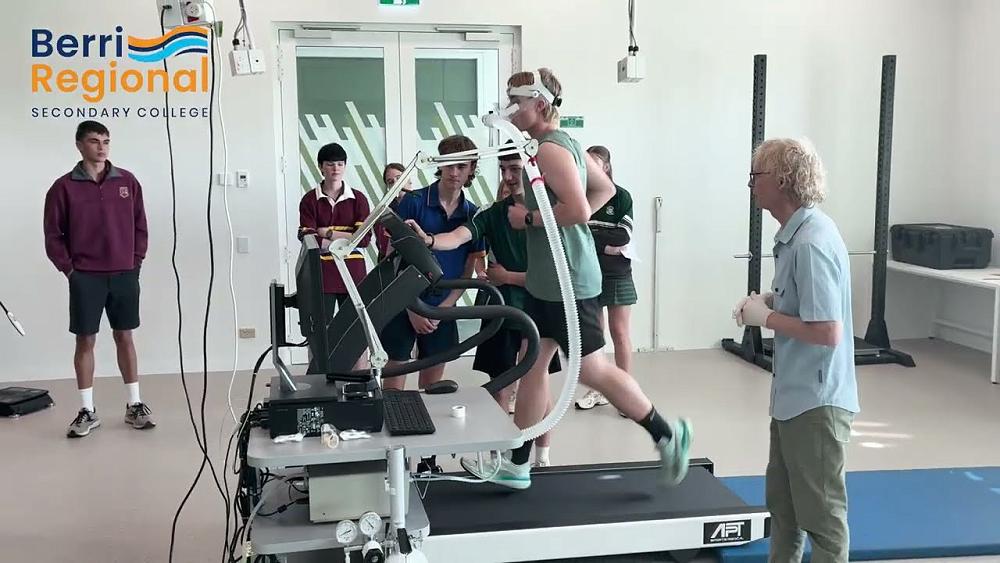
A new offering through the Riverland Secondary Schools Alliance is providing students with a pathway into elite sports.
The first term of the inaugural Specialist Sports Academy has provided students with an opportunity to experience the training and technology available to elite athletes.
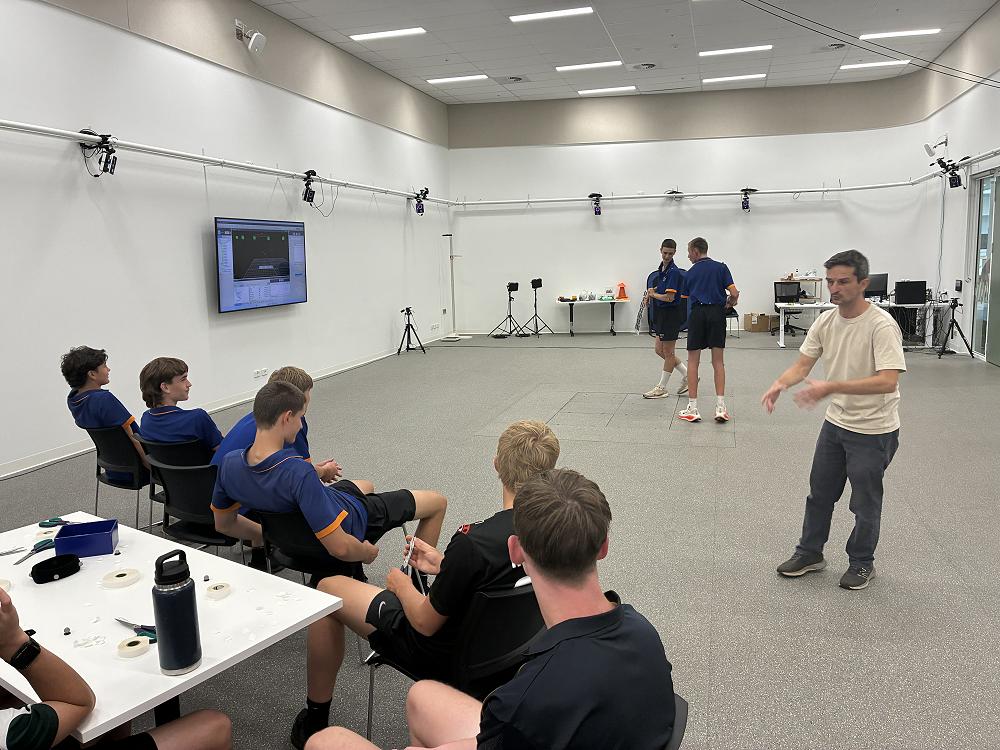
Academy students travelled to Adelaide on Friday of Week 8, visiting the South Australian Sports Institute (SASI), South Australian Sports Medicine Association (SASMA) and the Adelaide University High Performance Sport Centre.
The excursion was designed to provide students with an insight into exercise physiology, biomechanics and elite sport environments.
Nineteen BRSC have enrolled into the first year of the Specialist Sports Academy, which is offered to students through the Riverland Secondary Schools Alliance.
It is available to students from Years 10-12 and provides a pathway to becoming elite athletes and developing professional sporting careers or working in associated fields.
BRSC Year 11 student Max said being able to complete the physiology testing gave him something tangible to measure his improvement against in the future.
“My favourite thing was touring the facilities and seeing the recovery area and gym and understanding what the pro athletes do,” he said.
“Something I could take away would be my test results and if I ever do them again, I could try to improve.”
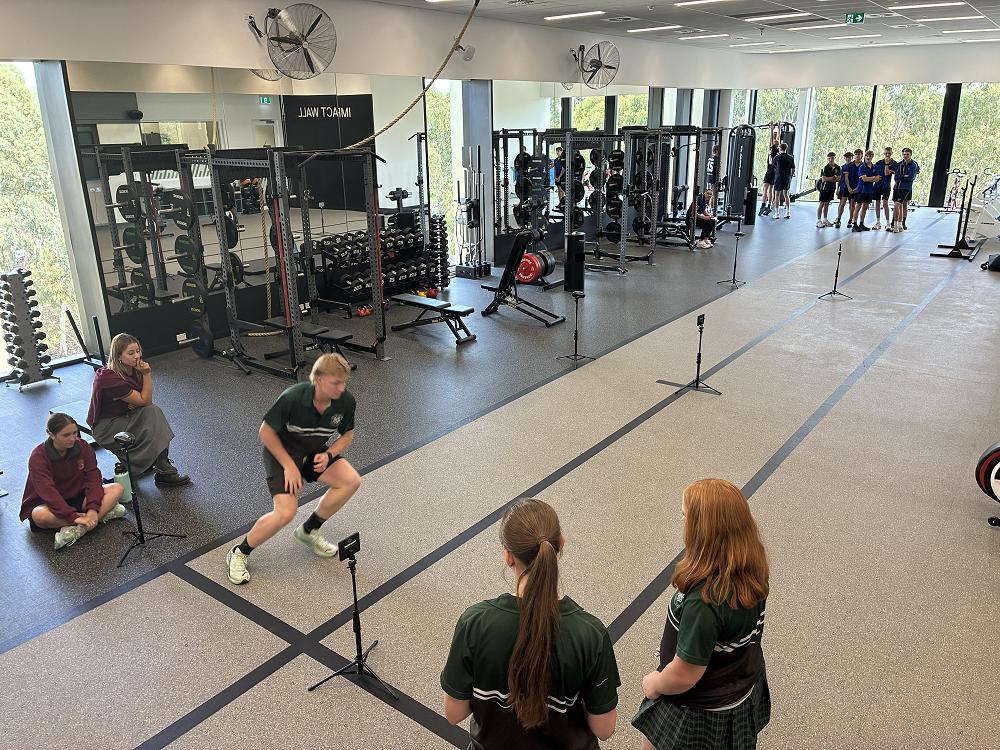
Academy pilot focuses on football but more to come
This year’s pilot program has a football focus with the aim of including more sports in the future.
Specialist Sports Academy lead teacher Joshua Vater said it was an exciting new offering for regional students that could lead to careers in professional sport.
“We would love to see students make it to the elite level as anything from physios to coaches to players,” Mr Vater said.
“We want them to shoot for that level but if they don’t get there then will have more people in our region who are upskilled to give back to local clubs.”
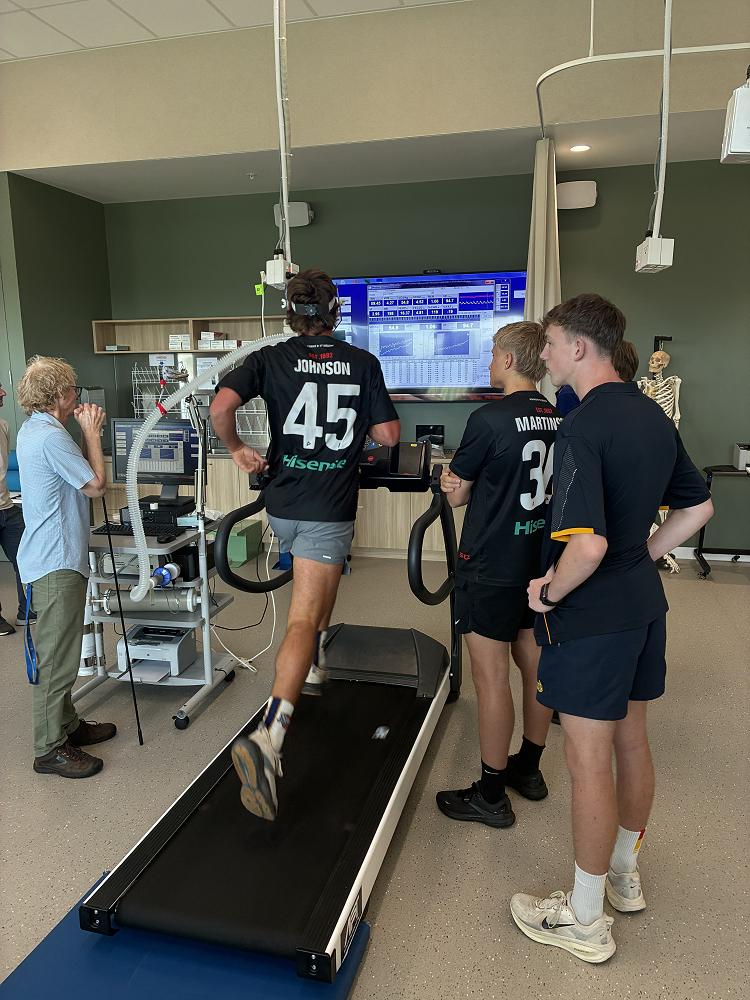
VO2 testing provides precise data for students
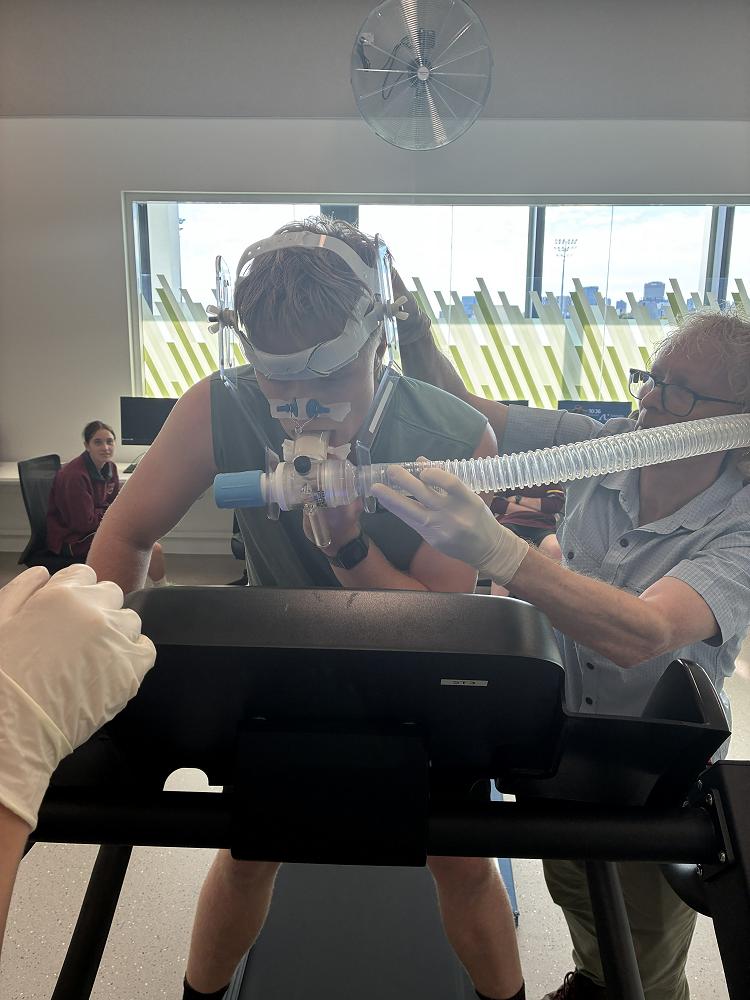
A highlight of the excursion for many students was the opportunity to complete V02 testing, which consists of high-intensity workouts designed to increase the maximum amount of oxygen an athlete can use during exercise.
BRSC Year 11 student Mitchell said it was a demanding test.
“I’ve just done the V02 max test on the treadmill, it tests the amount of oxygen your body can take in and use and push back out per millilitre per minute per kilo relative to your body size,” Mitchell said.
“It was alright for the first three-quarters but when it gets to the end – because I usually run breathing through my mouth and nose and (with this) you have your nose blocked – it’s challenging so I’m a bit buggered now.”
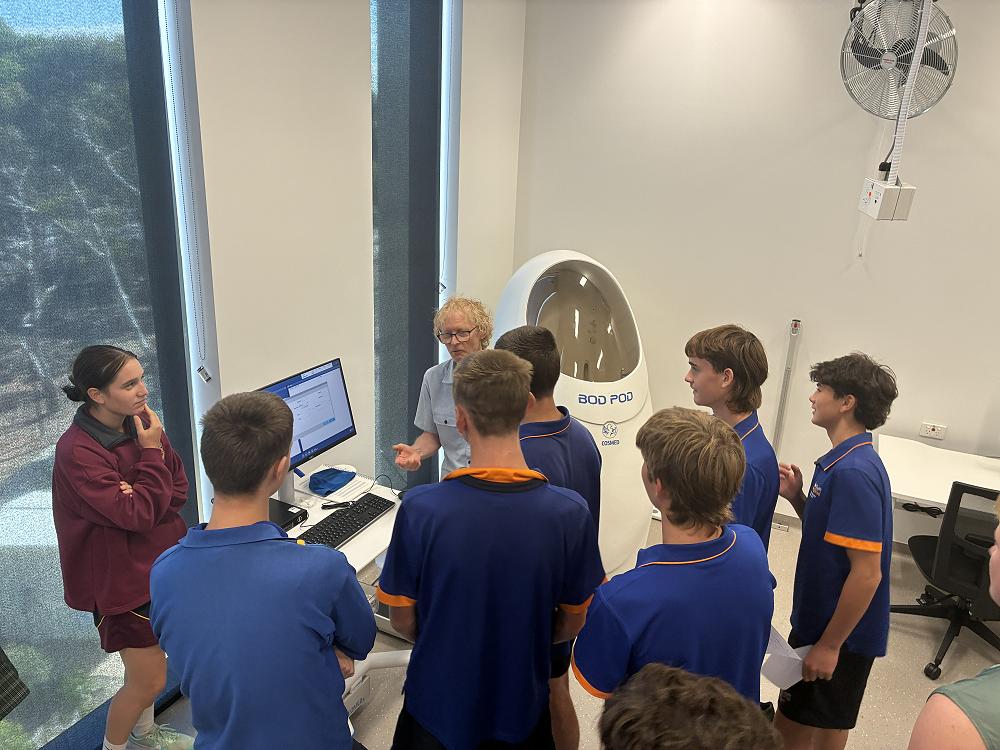
Facilities able to recreate foreign conditions
Mitchell appreciated the opportunity to tour the facilities available to elite athletes.
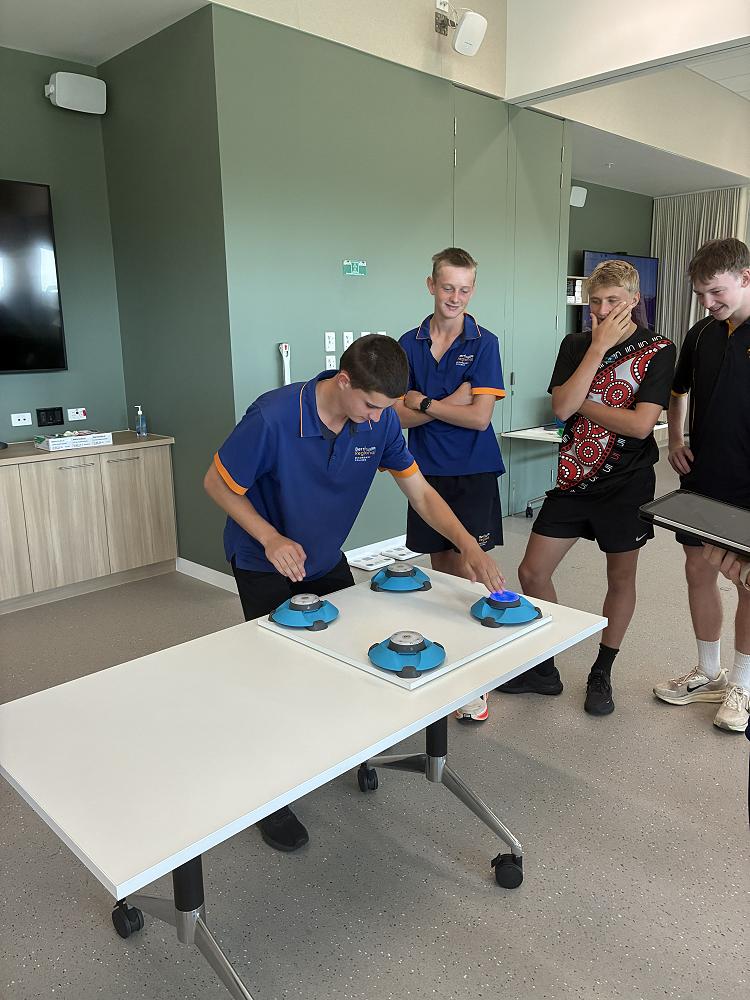
“At SASMA (SA Sorts Medicine Association) we had a tour of the gym facilities and the technology they have, including cameras on all the equipment so athletes can see their own form and critique what they’re doing,” he said.
“They have a climate chamber where they can alter the amount of oxygen in the room and the humidity and temperature to prepare athletes for training in different locations, so say they go over to Asia where it’s more humid than SA they can train here in those conditions.”
Best exercises for strength, injury protection
Students were also surprised to learn which exercises provided the best results for strength training.
“We learnt that there were six different base movements that would be the best strength training for our age, they were push, pull, squat, lunge rotational and dead lift,” Mitchell said.
“We need to do these to avoid injury on game day.”
Improving access for regional students
The academy aims to develop networks to improve accessibility for regional students to sports training and career pathways.
Academy supporting teacher Adam Langford said forming close associations with Westies and other Adelaide-based specialist sporting institutions could reduce the burden of travel on local families.
“The demand for these local players is that at least once a week they are having to travel to Adelaide and, if we can lesson that impact, they might be retained a little longer in the West Adelaide football program,” Mr Langford said.
Alliance provides increased opportunities for learning
The Riverland Secondary Schools Alliance has existed for many years and was formalised about five years ago to enhance learning opportunities for students at Renmark High School, Berri Regional Secondary School, Loxton High School, Waikerie High School and Swan Reach Area School.
RSSA leader Emily Griggs said it allowed schools to offer innovative learning programs for local students.
“It is about collaborating to bring students from different towns together, to allow them to work on a shared passion,” Mrs Griggs said.
