
Year 9 Humanities and Social Sciences (HASS) students have been exploring how artefacts help societies to understand history.
They studied the types of artefacts about life during WWI that would typically be displayed in a museum.
They then choose their own artefact to recreate, using different techniques to create realistic dioramas.
Teacher Amber Ridley said the artefacts chosen by students included letters home, maps of trenches, gas masks, diaries, and dog tags.
“They looked at different artefacts then they recreated an artefact that they might find in a museum and then they created a plaque to explain the context and the significance it played in World War I,” Ms Ridley said.
Students then presented their projects to another class, sharing their learning and seeing how others had tackled the project.
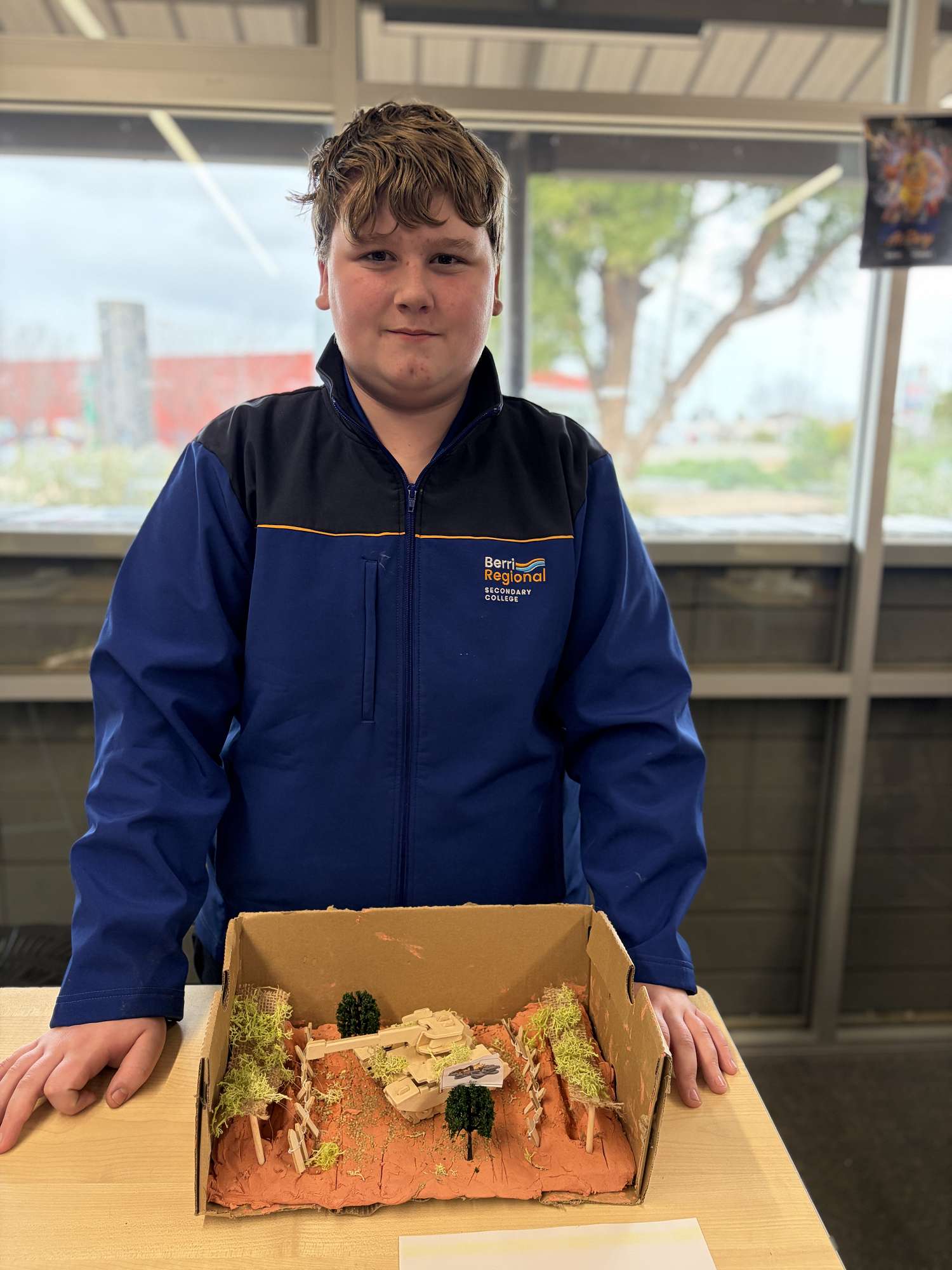
Student Jeremy created a diorama of the Western battlefield using a shoebox, mesh, clay, artificial trees and other craft supplies.
“The conditions were really rainy and wet and dangerous,” he said.
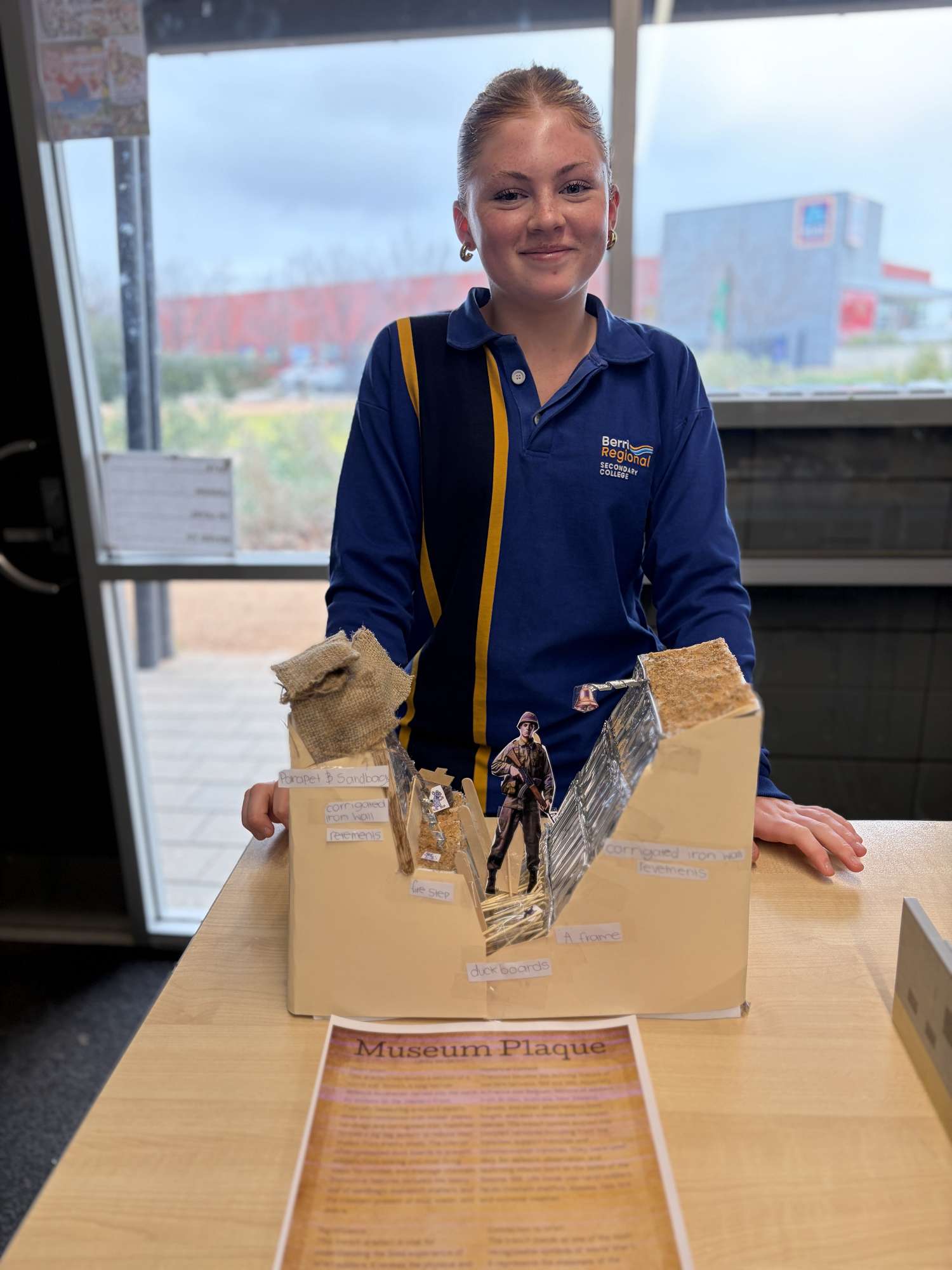
Student Lacy made a 3D model of a trench using cardboard, hot glue, metal to represent corrugated iron, sand and sandbags.
She said reconstructing the trench helped her understand the design and conditions for soldiers.
“The interior often contained duckboards to prevent soldiers from sinking into the mud,” she said.
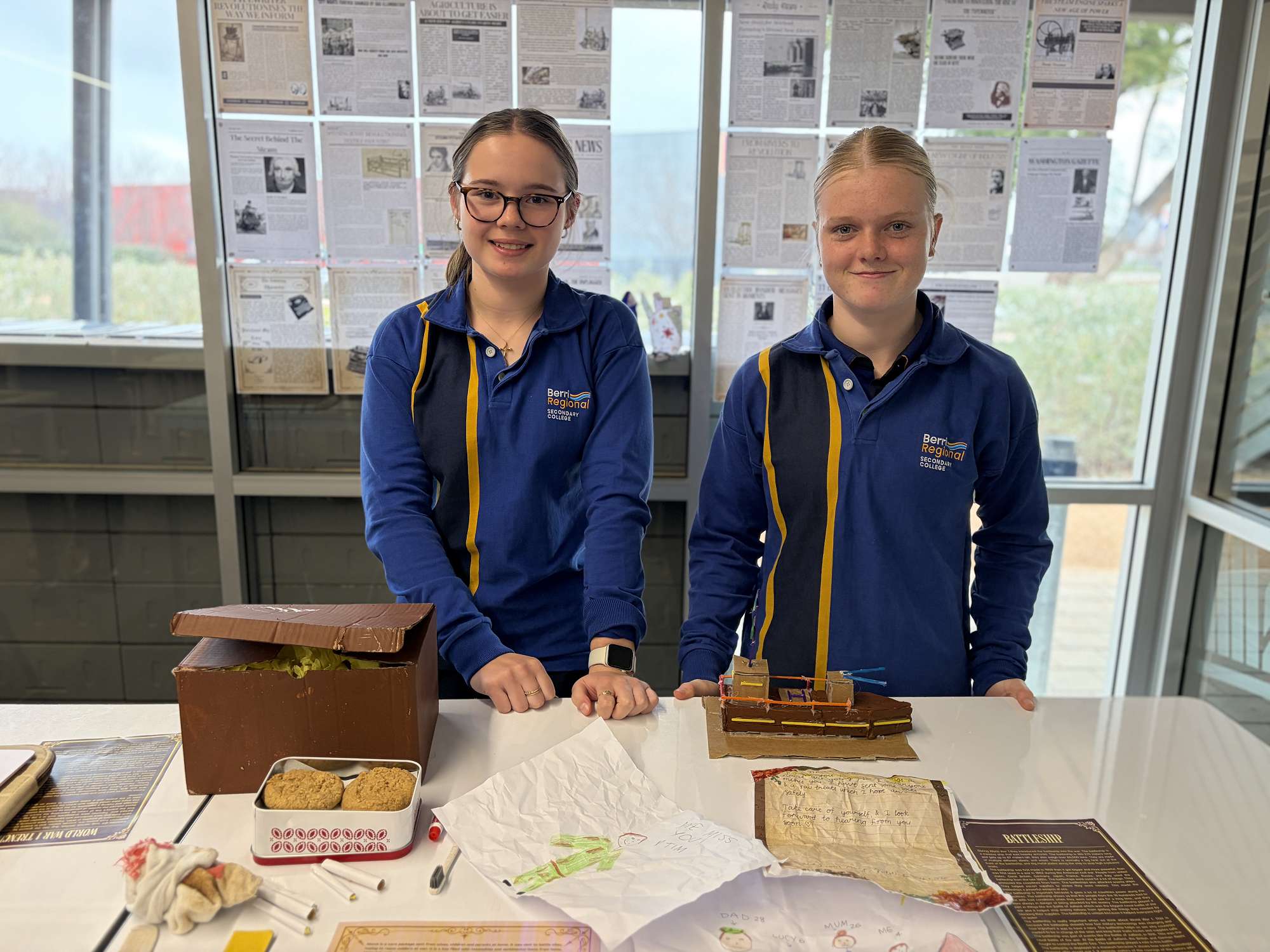
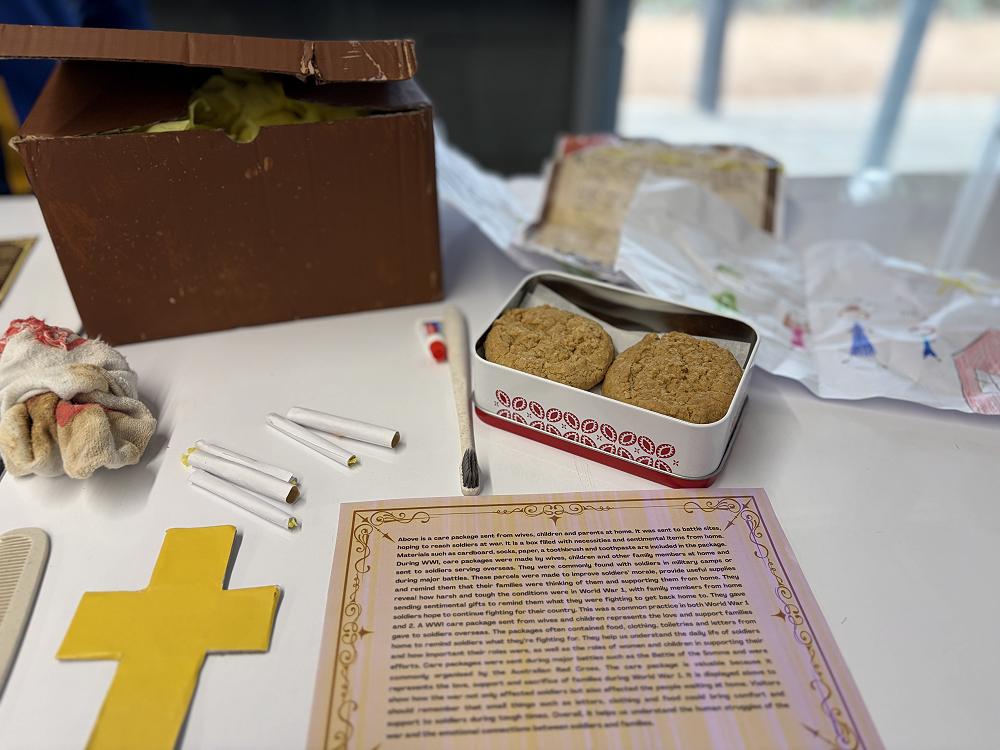
Adele created a care package from wives and children including pictures, letters, socks, fake cigarettes, toothpaste and toothbrush.
“It was cool to learn how they were living and conditions,” she said.
Charlize made a battleship using popsticks, cardboard, and hot glue.
“They were one of the main naval presences and they were very important to the war,” she said.
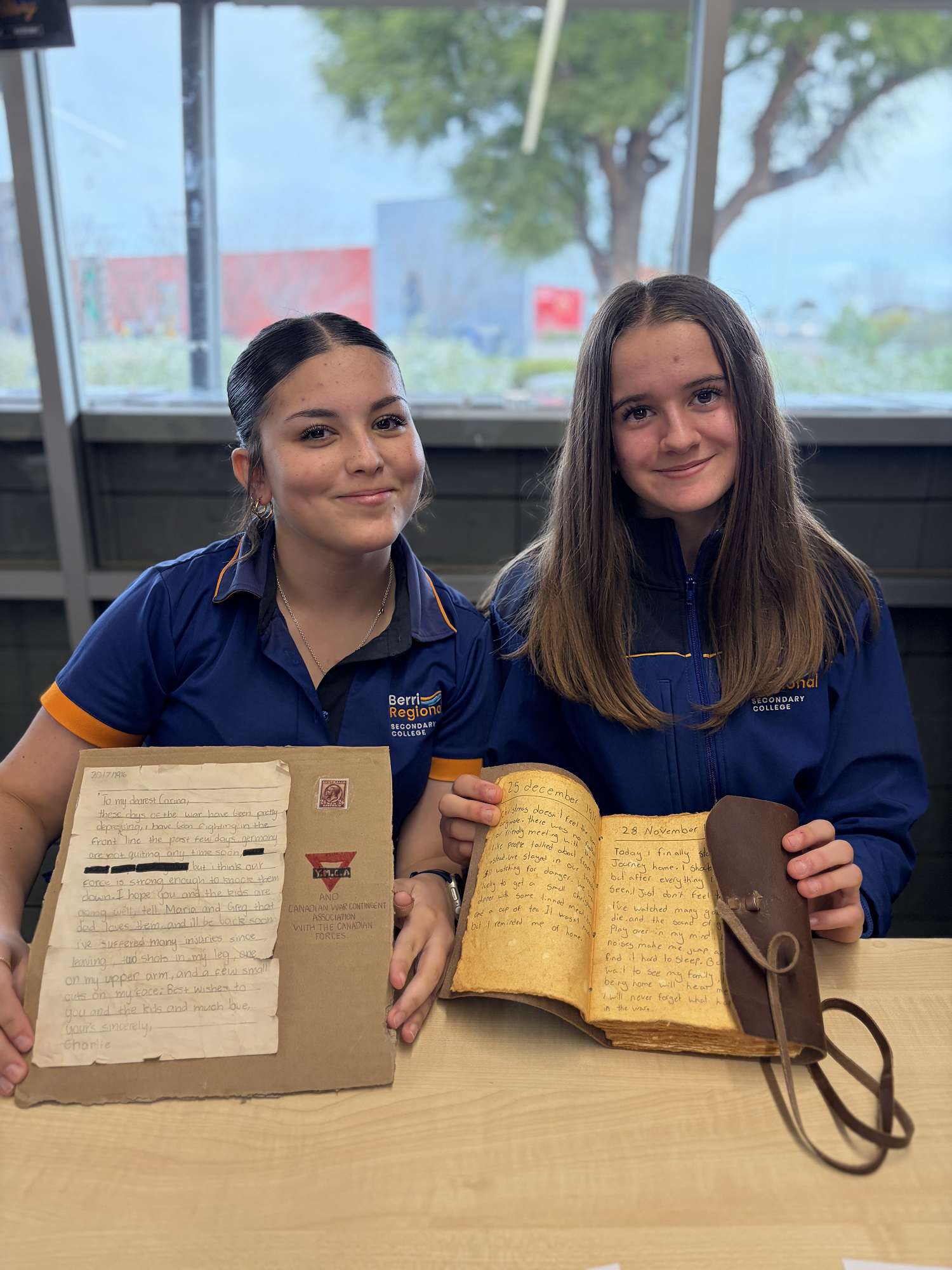
Mia made a letter home from a Canadian soldier who was writing to his wife and children, creating an authentic and aged look through tea-dying, stamps and redactions.
“In WWI, any letters that contained details that might reveal their location was written over in black ink,” she said.
Lilah made a journal from a soldier’s perspective, including details about the conditions and how they missed everyone back home, especially during Christmas.
